

Direct Video Transcription (Text Unedited)
Hi, I am Town Planner Adeleke Akinpelu, Principal Partner, SMC Professional Services, and also the Director, SMC Institute. I am sharing my thoughts on the idea, The Lean Startup, based on a book written by Eric Ries, The Lean Startup. The idea of The Lean Startup cuts across every facet of human endeavour, and also it provides the platform to adapt and also adjust business enterprises as it progresses over time.
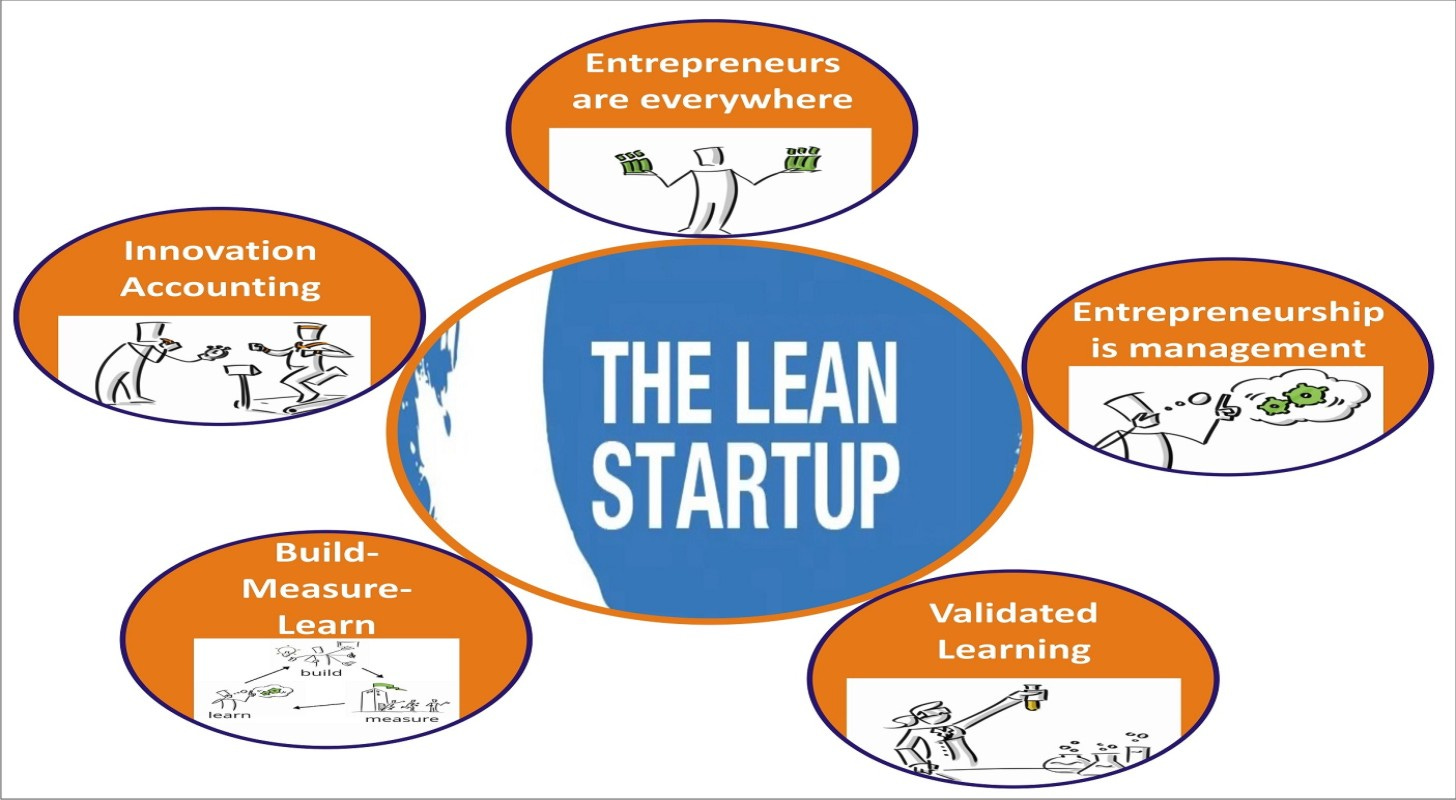
And its application cut across business and is based on the idea of lean manufacturing, about starting small. Basically, there are five principles of The Lean Startup.
The first principle is entrepreneurs are everywhere.
The second principle is entrepreneurship is management.
The third principle talks about validated learning.
The fourth principle talks about build, measure and learn.
The fifth principle talks about innovation accounting.
All these ideas together form the bedrock of The Lean Startup.
Now, taking it one after the other, entrepreneurs are everywhere.
1. Entrepreneurs Are Everywhere
The idea of entrepreneurs is that every individual is an entrepreneur, working in the public service, working in the private service, and also working in the non-profit sector. And this brought about the idea of a startup. Basically, a startup is a human entity that is designed to create products and services newly, most especially in an uncertain market.
So that is basically, looking at this idea of a startup means that it cuts across both individuals that are starting an activity newly, and also an organisation that is well established but are have decided or looking toward creating a new product or also a new service in a new market space.
2. Entrepreneurship is Management
Now, the idea about entrepreneurship is management. Basically, there is this idea that entrepreneurship is innovative, is in-thing, and so on.
However, one has to be so sure that entrepreneurship is also management. Entrepreneurship requires detailed management for one to have an outcome that is desirable. Then also, validated learning.
3. Validated Learning
Validated learning talks about learning with the course of the entrepreneurship activities, allowing the test of the vision and the test of the various elements that is involved in the entrepreneurship activities.
4. Build, Measure and Learn
Then also, the fourth principle talks about build, measure, and learn framework. The build, measure, and learn framework basically talks about an entrepreneur or a startup testing the market.
Now, how did this occur or how did this happen in the sense that entrepreneurship, in starting an idea, in starting an entrepreneurship activity, there are different plans that need to be established. However, in doing this, one needs to start in a lean way. Starting in a lean way, take the product to the market, take the service to the market, also test the market about their perception about the product and also about the activities.
In doing this, it enables the entrepreneur to further fine-tune his or her activities, which at the end of the day will be able to provide to the taste of the market. And this also talks about the idea of the minimum viable product. Now, this idea has been tested in the software industry where we have the beta version.
The beta version is a minimal level of a software that is pushed to the market to have a feel of what the market idea about the product and also enables the software developer to fine-tune the product over a period of time. So, the minimum viable product talks about putting into the market space a minimal version of the service or the product that enables the entrepreneur to have a taste of the market, to have a feel of the market about such idea and invariably, it enables the entrepreneur to fine-tune the service or the product over a period of time. And there is this, the build, measure, learn, grow.
It starts from the idea, the idea you build, then from the build, you develop your product or service, then you take it to the market. In taking it to the market, you have a feel of the market. In that, you talk about the major aspects.
You are able to determine what is the perception of the market concerning the product and services. Then, after you have your data, you learn from your data and this helps you also to also fine-tune your idea. So, the process all starts again.
So, invariably, all this enables the entrepreneur to do is, it enables the entrepreneurs to start in a lean way because basically, the different plans that would have been generated are based on assumption. However, oftentimes, most of these assumptions are not the reality. So, it enables the entrepreneur to build on the service and product over a period of time.
5. Innovation Accounting
And the last of the principle talks about innovation accounting. Innovation talks accounting, talks about detailed accountability of the entrepreneurship process that the entrepreneurs need to take an account of the different process over a period of time. So, invariably, we are talking about the five principles of the lean start-up.
Summary
It talks about entrepreneurs are everywhere, that everybody is an entrepreneur, both in the public, private, and the non-profit sector. Then, it also talks about entrepreneurship is management. So, that takes away the misconception that entrepreneurship has nothing to do with management.
Then, we also talk about validated learning. Then, we also talk about the framework of the build, measure, and learn over a period of time. And then, the last one, which is innovation accounting.
So, these are the five principles that form the bedrock of the lean start-up. Thank you.

